IntSense
Interaction policy Brain-neutral
Book a pilot
IntSense
Social Intelligence for Physical AI

Sense Humans. Guide Machines.

The human interaction layer that helps machines understand when and how to engage.

The human interaction layer

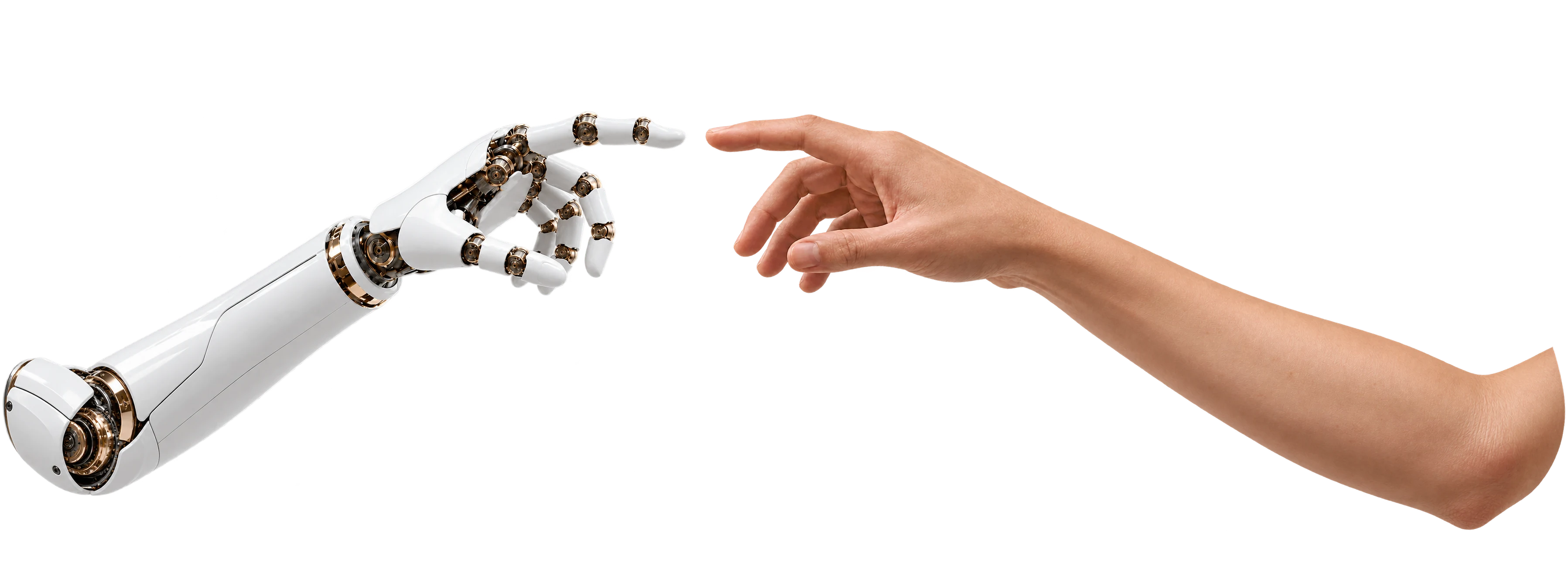
A robot that avoids collisions can still frighten, crowd or startle the person in front of it. IntSense decides whether, when and how it should act — on prototypes in R&D and on fleets already on site.

Safety-first On device R&D-stage welcome
Engage Ask Slow · reroute Disengage
Machines can move
we teach them when to engage
02 — The gap on site

Your fleet already plans routes and avoids people reliably. What nothing decides is whether to approach this person, right now, at this angle — or wait, ask, or back off. That gap is where staff take manual control, where people get startled, and where rollouts stall.

03 — How a pilot runs
Week 0
Kickoff and scope

We agree the site, the embodiment and the one interaction that keeps costing you time. Data scope and retention are written down before a single sensor is switched on.

One site Named ops contact
DRAG
Week 0Week 12
Social intelligence for physical AI · 

Machines already know how to move. IntSense decides when and how they should engage with the person in front of them — and hands that decision to the stack you already run.

ROS 2 / DDSNVIDIA GR00TSkildOEM SDKs
04 — What a deployment changes
What a deployment is measured on

Fewer manual overrides

Every time an operator takes control because the robot handled a person badly is a logged event. That count is the first number we move.

Steadier throughput

Robots that read the room stop freezing in shared aisles and stop making people detour. Cycle times hold closer to the model in your business case.

A faster yes from ops

You leave the pilot with a written benchmark against your current baseline — the evidence your operations and safety leads ask for before a fleet rollout.

03 — Platform

One layer between perception and motion.

The layer we are building: IntSense fuses multimodal human signals into an interaction state, predicts the likely human response to each candidate action, and emits a single decision your controller can accept or ignore. It is a policy layer — never a motion planner.

01

Multimodal signals

Voice and intonation, vision, language, distance and optional wearables — captured on device.

02

State and context

Gaze, engagement, intent, crowd density, zone rules and the robot's current task.

03

Response predictor

P(human outcome | state, context, candidate robot action), with a calibrated confidence.

04

Decision API

One high-level call: SLOW · STOP · REROUTE · ASK · ENGAGE · DISENGAGE, with alternatives.

05

Your robot brain

Your planner and controller execute the motion exactly as they do today.

Decision payload · illustrative POST /v0/decision
{
  "decision": "ASK",
  "confidence": 0.82,
  "state": {
    "engagement": "open",
    "gaze": "on_robot",
    "distance_m": 2.4
  },
  "context": {
    "zone": "ward_corridor",
    "crowd": "low",
    "task": "supply_delivery"
  },
  "alternatives": ["SLOW", "REROUTE"],
  "expires_ms": 600
}
Contract

Advisory by default

Every decision carries a confidence and an expiry. Your controller decides whether to act on it, and your existing safety layer always has the final word. Nothing we emit can override a stop.

Evidence

Measured, not asserted

Each decision is logged with the human outcome that followed it — approach accepted, path abandoned, handover completed. You get a benchmark against your current navigation baseline, not a demo reel.

04 — Integration

Neutral across brains, hardware and vendors.

We sit above your robot brain and below nothing. If your stack can accept a high-level suggestion over a topic or an SDK call, it can run IntSense — no hardware change, no model swap, no vendor lock.

Stage of maturity

R&D robots are the right time, not too early

Most teams meet us with a prototype on a bench, not a fleet on a floor — and that is the cheaper moment to decide how the machine will behave around a person. We work with robots still under development: a single unit, a lab, a research programme. No production volume required, no fleet commitment, and the interaction contract is fixed before your hardware is frozen.

Single prototypeResearch programme Pre-productionDeployed fleet
Why it is a safety question

Unmanaged interaction is a hazard of its own

A robot that keeps its clearance can still startle someone into a machine aisle, crowd a nurse mid-procedure, or trigger an operator to grab manual control at the wrong second. Those are safety events, and today nothing in the stack decides them. IntSense makes that decision explicit, logged and reviewable — while your certified safety functions keep the final word and nothing we emit can command torque or override a stop.

Advisory onlyNo motor torque Every decision loggedSafety & privacy audit
ROS 2 / DDS NVIDIA GR00T Skild OEM SDKs Custom controllers AMRs Drones Humanoids Service robots
Boundary

We never touch torque

IntSense emits decisions, not trajectories, velocities or joint commands. Your motion stack and your certified safety functions are untouched, which keeps your existing validation valid.

Deployment

On device, zero cloud

The full loop — speech emotion, transcription, local language model, response — runs on the compute already on the robot or on a local edge box. No connectivity requirement, no audio leaving the site.

Rights

Your fleet data stays yours

Data scope, retention and use rights are written into the contract before the first sensor is switched on. Site calibration and a privacy and safety audit are part of every deployment.

07 — Deployments

Built for the places robots and people share.

The policy is the same everywhere; the thresholds, zones and acceptable interruptions are calibrated per site during onboarding.

01

Warehouses & logistics

Mixed aisles where pickers and AMRs negotiate the same lane. The robot learns when to hold back and when to keep moving, so fewer runs end in a manual override.

AMR fleetsPick aislesNight shifts
02

Hospitals & care

Corridors and wards where interrupting the wrong person at the wrong moment is the real failure mode. The layer reads readiness before the robot ever speaks.

Ward deliveryNight roundsConsent to approach
03

Retail & service

Approach that reads as helpful rather than intrusive — and a clean disengage the moment the answer is no, without the robot trailing the customer down the aisle.

GreetingHandoverClean disengage
04

Humanoids & field robots

Embodiments people read socially, where posture, timing and voice carry as much weight as the path. One policy travels across every body you deploy.

HumanoidsDronesCross-embodiment
06 — Programs

Start with one site. Scale by fleet.

Every engagement starts as a paid pilot with a benchmark agreed before the work begins — and you keep that written benchmark whether or not you licence anything. Prices below are list ranges; scope sets the final figure.

Step one
$25–50K Paid pilot · 8–12 weeks
  • One embodiment, one site
  • Adapter for your stack
  • Benchmark vs your current baseline
Platform
$150–300K Per year · OEM account
  • Decision API and adapters
  • Model updates and evaluation
  • Support for your integration team
Fleet
$250–750 Per robot · per year
  • Volume tiers by fleet size
  • Non-exclusive by default
  • Field or region exclusivity negotiable
Per site
from $25K Calibration & audit
  • Zone and threshold calibration
  • Safety and privacy audit
  • Outcome reporting for your stakeholders
Inside a pilot

What you get in twelve weeks

  • An adapter for your controller, brain or ROS 2 graph
  • On-device deployment with no cloud dependency
  • Linked episodes: state, context, action and the human outcome
  • A written benchmark against ordinary navigation on the same route
What we ask from you

To make it real

  • One site with regular human traffic and a named operations contact
  • Read access to the sensors already on the robot
  • An integration engineer for roughly one day a week
  • Agreement on data scope and retention before we start
Design-partner programme open · three embodiments

Tell us where your robots meet people.

Send the embodiment, the site and the interaction that keeps going wrong. We reply with an integration sketch for your stack and a pilot scope — or an honest note that it is too early for your fleet.

Opens your mail client with everything filled in. We reply with an integration sketch within two working days.

Thanks — your message is ready in your mail client. If nothing opened, write to partnerships@intsense.ai directly.

01

A 30-minute call

Your embodiment, your stack, the interaction that costs you time on site.

02

An integration sketch

Written, specific to your controller — where the decision enters and what it can and cannot touch.

03

A scoped pilot

One site, 8–12 weeks, a fixed price and a benchmark defined before we start.

The short version

Machines can move. We teach them when to engage.

Who you will be talking to

Veronika Kalneus
Founder & CEO, IntSense
Social Intelligence for Physical AI
partnerships@intsense.ai
hello@intsense.ai

Where we are today

A working zero-cloud loop — speech emotion, transcription, local language model and speech — where the inferred human state already changes the interface, the voice and the next action.

What we are building next

Multimodal response prediction and a cross-robot interaction policy, proven on a drone, an AMR and a humanoid across three live sites.

Who you will work with

A small team: applied AI and voice analytics on the product side, transformer and speech engineering on the model side, advised on speech AI from inside the industry.